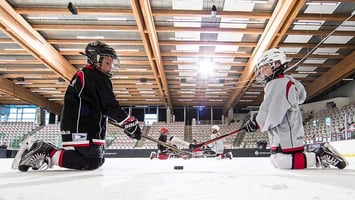

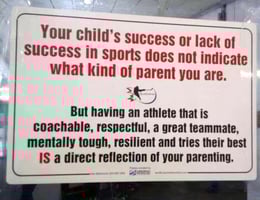
Here's the truth, any good coach that has been around for a bit knows, kids are a direct reflection...
They're Watching More Than You're Teaching
One of the greatest things about hockey is that it teaches lessons that extend far beyond the rink. Coaches spend hours developing skills and systems. Parents dedicate years driving to practices, games, camps, and tournaments. Everyone involved wants to help young athletes improve and reach their potential.
But while adults often focus on teaching the game, young athletes are learning something much bigger.
They're learning from the example we set.
Every interaction, reaction, and conversation becomes part of their education. Long before players fully understand systems, strategies, or advanced skills, they are observing the adults around them. They notice how coaches handle adversity. They pay attention to how parents respond to success and failure. They watch how adults treat officials, opponents, teammates, and one another.
The reality is that the most important lessons young athletes learn may never be written on a practice plan or discussed in a postgame meeting.
They are learned through observation.
The Power of Example
Children naturally look to adults for guidance. Whether we realize it or not, our actions often speak louder than our words.
A coach can talk about accountability all season long, but if they constantly blame officials for losses, players notice. A parent can stress the importance of respect, but if they're criticizing coaches and referees from the stands, that message becomes confusing.
Young athletes are constantly trying to understand how the world works. They learn what is acceptable behavior by watching the people they trust most.
When adults respond to adversity with composure, athletes learn resilience. When adults treat others with respect, athletes learn sportsmanship. When adults take responsibility for mistakes, athletes learn accountability.
Those lessons are often remembered long after the details of a game have been forgotten.
More Than Wins and Losses
In youth sports, it's easy to place too much emphasis on outcomes.
Parents want their children to make the team, score goals, earn ice time, and win championships. Coaches want their teams to perform well and experience success. These goals are understandable, and pursuit of excellence is an important part of development.
However, the scoreboard tells only a small part of the story.
Years from now, very few players will remember the final score of a tournament game they played at twelve years old. Most won't remember how many points they scored during a particular season.
What they will remember are the people who influenced them.
They'll remember the coach who believed in them when their confidence was low. They'll remember the parent who supported them through difficult times. They'll remember the adults who taught them how to handle disappointment, overcome setbacks, and keep moving forward.
Those experiences often shape who they become as adults far more than any win or loss ever could.
The Ride Home Matters
One of the most powerful moments in youth sports doesn't happen during a game.
It happens in the car afterward.
For many young athletes, the ride home can have a lasting impact on how they view sports and competition. After a game, players are often replaying every shift in their minds. They know when they made mistakes. They know when they didn't play well. They know when they let opportunities slip away.
At that moment, what they need most isn't always another evaluation of their performance.
They need support.
The best parents understand that their child already has coaches responsible for correcting mistakes and improving performance. Their role is different. Their role is to provide encouragement, stability, and unconditional support.
When players know they are valued regardless of the scoreboard, they develop confidence. They learn that their worth as a person isn't tied to goals, assists, ice time, or team selection.
That confidence creates athletes who are willing to take risks, make mistakes, and continue growing.
The Responsibility of Coaching
Great coaches understand that they're developing people, not just players.
Of course, teaching skills is important. Skating, shooting, positioning, and game concepts are all essential parts of the sport. But the influence of a coach extends far beyond technical instruction.
A coach's attitude shapes culture.
Players notice how they are treated after making mistakes. They notice whether effort is valued as much as talent. They notice whether every player is given respect or only the top performers.
The coaches who leave the biggest impact are rarely remembered only for the systems they taught. They are remembered because they cared. They challenged players to improve while helping them believe in themselves. They created environments where athletes could develop confidence, character, and resilience.
Years later, former players often remember those relationships far more vividly than they remember game plans.
The Legacy We Leave
As adults involved in youth sports, it's natural to want young athletes to succeed. We want them to reach goals, pursue opportunities, and experience the rewards that come from hard work.
But perhaps there is a more important question we should ask ourselves.
Who are they becoming during this journey?
Are they learning respect?
Are they learning responsibility?
Are they learning perseverance?
Are they learning how to be a supportive teammate and a positive leader?
These are the qualities that remain long after the final game has been played.
Every coach and every parent leaves a legacy. Not through the number of wins collected or championships won, but through the impact made on the young people who were entrusted to them.
The greatest achievement in youth hockey isn't developing a great player.
It's helping develop a great person.
Because long after athletes forget the drills, the practices, and the scores, they will remember the adults who showed them what character, leadership, and integrity look like.
And whether we realize it or not, they're watching every day.
At 4Check Hockey, we believe hockey is about much more than developing skills. It is an opportunity to build character, resilience, leadership, and lifelong values. Every parent and coach has the ability to shape a young athlete's future, not just through what they teach, but through the example they set.